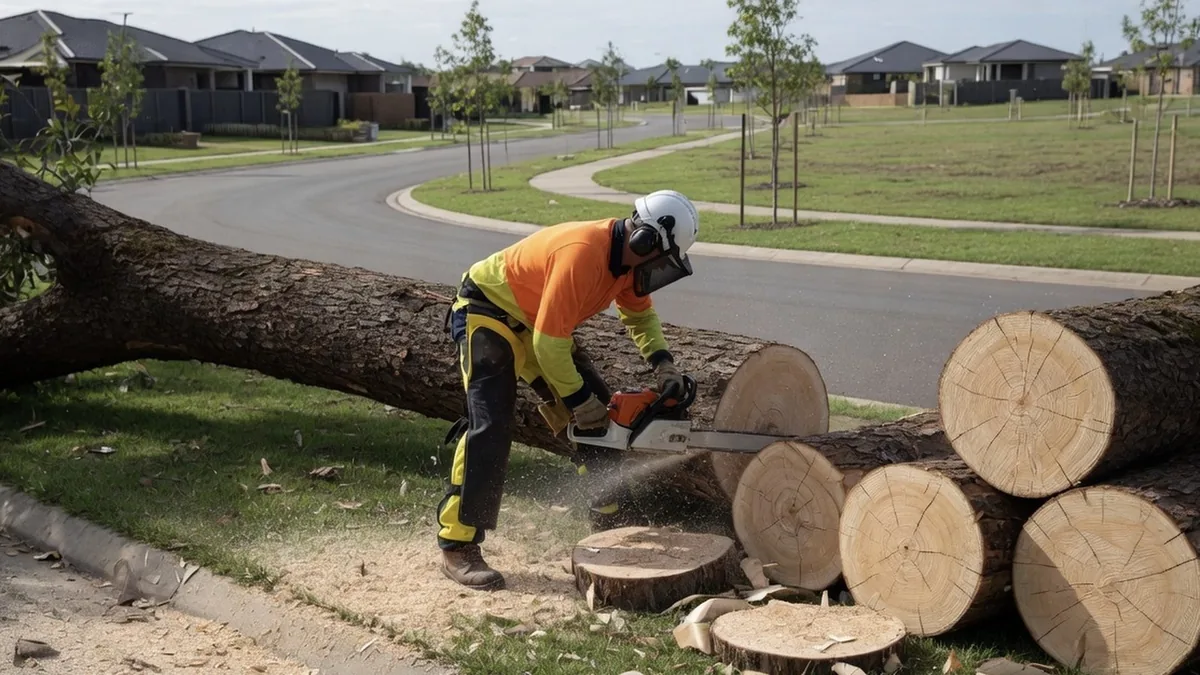
Tree Lopping
Careful crown reduction and lopping for the tall old camphor laurels and gums around Camden's historic streets, done with respect for the tree and your neighbours.
Learn more →Lopping, pruning and tidy clean-ups for Camden's heritage plantings and the young trees going into the new estates. Free quotes, no pressure, and we turn up when we say we will.
Camden is two towns in one, and its trees show it. There is the old country town — the jacarandas that have lined Argyle Street since 1927, the tight Victorian grid of John, Elizabeth and Edward Streets named for the Macarthurs, the big canopy around Macarthur Park, the showground plantings at Onslow Park, and the river oaks and forest red gums following the Nepean along the flats below Camden Park. Then there is the ring of new estates — Oran Park, Gledswood Hills, Spring Farm, Catherine Field — where the trees are ten years old, staked, and already outgrowing the spot the builder put them in.
We connect Camden locals with tree crews who work both sides of that. A hundred-year-old camphor laurel leaning over a heritage cottage is a completely different job to a young magnolia that needs shaping before it gets away from you, and it takes a different head to price each one honestly. Call (02) 4602 1480 for a free, no-pressure quote.
On the old side of town it is the big stuff: camphor laurels that were planted as shade a lifetime ago and now dwarf the house, liquidambars lifting paths with their surface roots, jacarandas that need a light, careful hand rather than a heavy one, and mature eucalypts left over from the Cumberland Plain woodland that once covered all of this. Down on the river flats at Elderslie and Camden South you get river oak (Casuarina cunninghamiana) and forest red gum, plus the odd Camden white gum — Eucalyptus benthamii, the Nepean River gum, which is critically endangered nationally and is not a tree anybody should be touching without proper advice.
Out in the newer estates the problems are the opposite. Young trees planted too close to the slab, fence line or pool. Fast, brittle species putting on three metres a year. Screening plants that were the right size for the yard for about four summers. Getting in early with the right pruning at that stage saves you a removal bill in fifteen years.
Under nearly all of it sits the same heavy, reactive Wianamatta shale clay of the Cumberland Plain, with alluvial terraces along the Hawkesbury–Nepean. Clay like that holds water in a wet run and cracks in a dry one, which is exactly why so many Camden trees drop limbs after a long soak — the 2022 floods that put Onslow Oval and the Bicentennial Equestrian Park under water were followed by a very busy few months of limb failures.
This is the part most people get wrong, so we would rather say it plainly. Most trees in the Camden LGA are protected. Camden Council's Development Control Plan, working alongside the State Environmental Planning Policy (Biodiversity and Conservation) 2021, treats a tree as protected once it hits any one of these:
That threshold is low. A ten-year-old tree in an Oran Park backyard will usually meet it. Applications to prune or remove are lodged through the NSW Planning Portal with a site plan, photos and owner's consent, and Council assesses them within 28 days once fees are paid. There is a short exempt-species list — privet (Ligustrum sp.), African olive, honey locust, cocos palm and Chinese celtis — and minor pruning of branches no thicker than 50mm is allowed provided it does not harm the tree. Camphor laurel, for the record, is not on that exempt list.
Street and verge trees are Council's, managed by its Urban Forest team, and residents cannot prune or remove them — requests go to Council. Council also does not referee disputes about a neighbour's tree; that path runs through mediation or the Land and Environment Court. Unauthorised work on a protected tree can attract significant penalties, so it is worth a quick call to Council before anything comes down.
We are not arborists sitting at Council's desk, so where a case is genuinely unclear we will tell you to confirm it with Camden Council directly rather than take our word for it. Sources: Camden DCP — Trees and Vegetation and Trees in Camden FAQ.
We are local to Camden, not a call centre. We know the difference between an Elderslie river flat and a Currans Hill ridge block, and which streets a chipper can actually get down.
We turn up when we say we will. No all-day window, no phone call that never comes.
Ask for the paperwork. Council expects tree work to be done by a qualified arborist carrying public liability cover. We ask the local crews we work with to hold it — and we would rather you saw the certificate yourself before anyone starts. Any decent operator hands it over without blinking.
Tidy, every time. Yard raked, driveway blown down, green waste gone. We treat the place like our own.
A clear price, up front. A free quote, in plain English, with no pressure and no surprise line items at the end.
From the old town and Camden South out through Narellan, Narellan Vale, Elderslie, Currans Hill, Mount Annan, Harrington Park and Smeaton Grange, across to Cobbitty, Grasmere and Ellis Lane, and north into Spring Farm, Gledswood Hills, Catherine Field and Oran Park. The full rundown, suburb by suburb, is on our local areas page.
Whether it is a heritage jacaranda that needs a gentle tidy, a self-sown gum too close to the fence, or a stump you have been mowing around for two years — have a chat with us first. It is a free quote and honest advice about what your tree actually needs, even if the answer is "leave it alone for now".
Call (02) 4602 1480.
We know the old town's heritage plantings and the new estates alike — from Elderslie to Oran Park.
When we say we'll be there, we're there — no waiting around all day for a call that never comes.
We treat your yard like our own — full clean-up and green waste removal on every job, no mess left behind.
A friendly, honest quote with no pressure — just clear advice on what your trees actually need.
Careful crown reduction and lopping for the tall old camphor laurels and gums around Camden's historic streets, done with respect for the tree and your neighbours.
Learn more →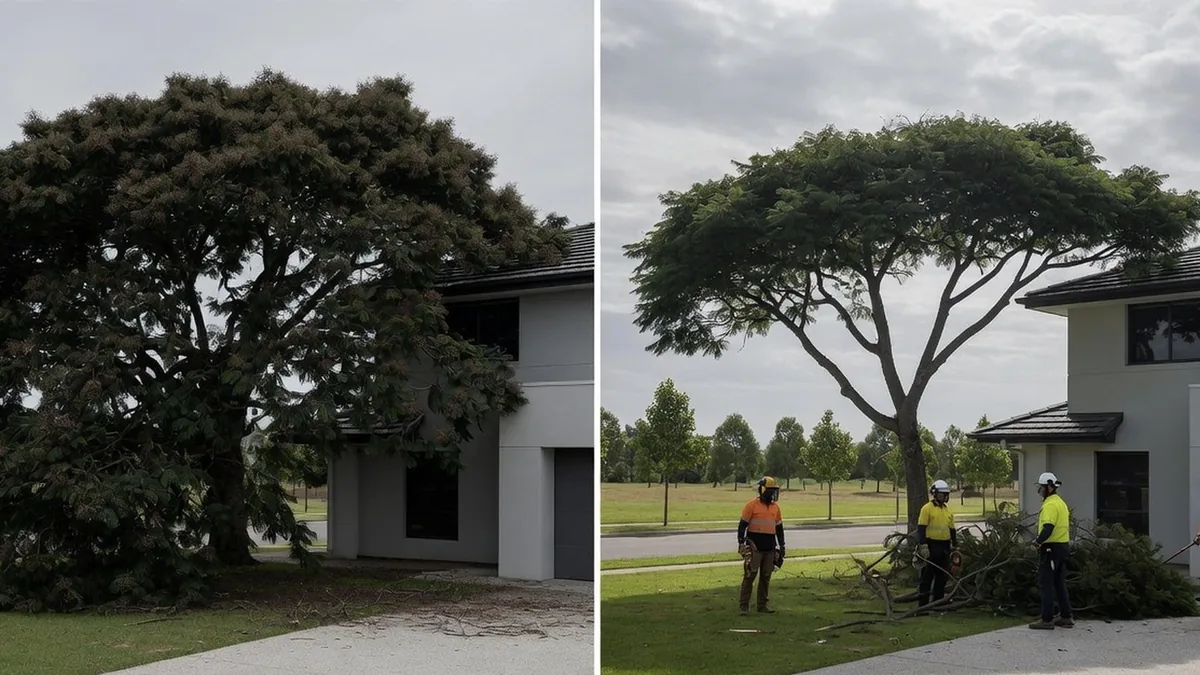
Shaping and deadwooding for established jacarandas and liquidambars in the old town, plus formative pruning for the young trees going into new Oran Park and Harrington Park yards.
Learn more →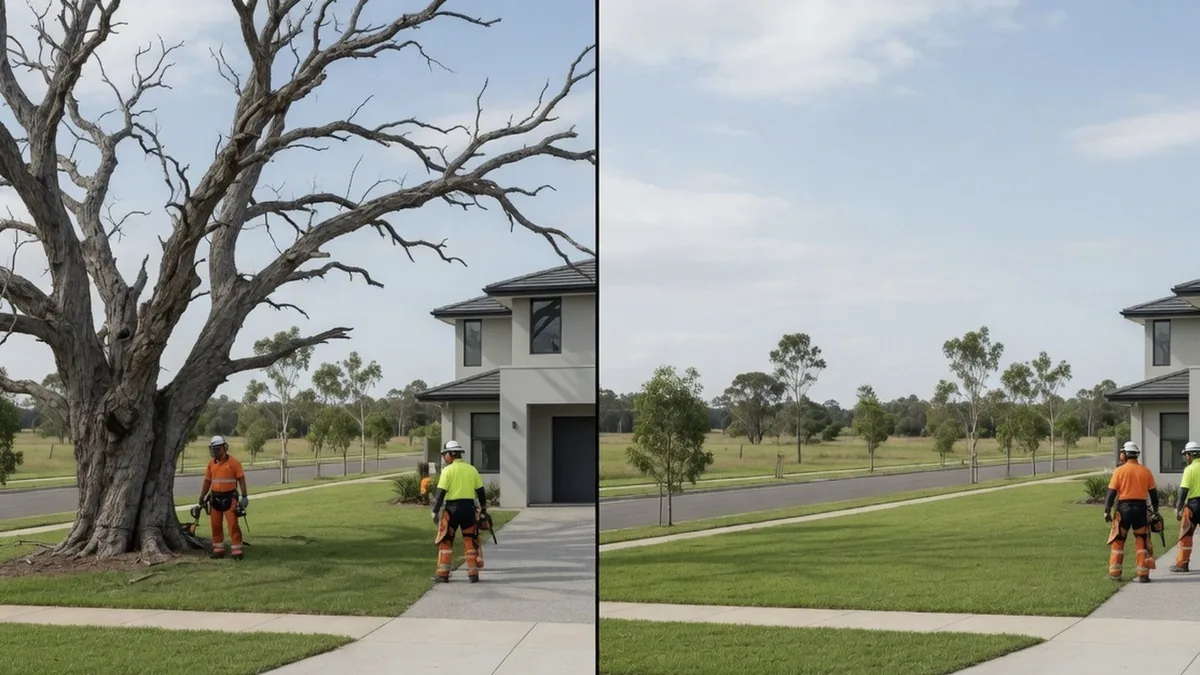
Safe, complete removal of dead, diseased or unwanted trees — from grand old plantings near the town centre to fast-growing self-seeded gums on newer blocks.
Learn more →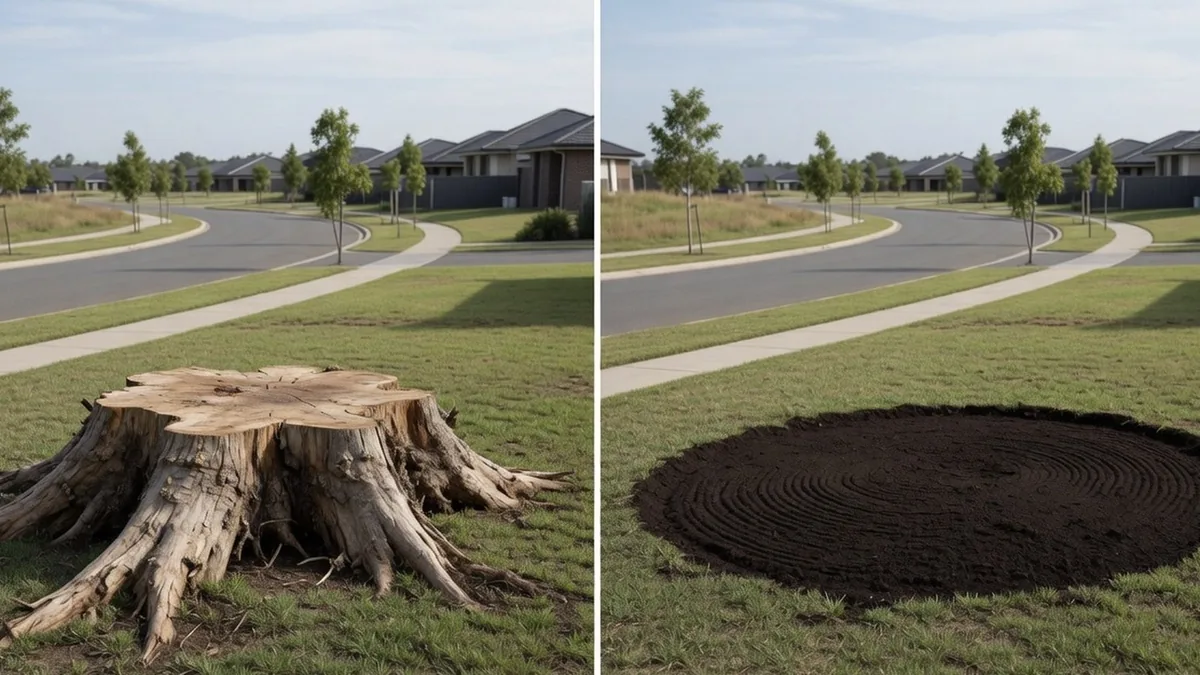
Below-ground stump grinding so old removals don't keep sprouting suckers, leaving a clean, mowable yard whether you're on a heritage block or a new estate lot.
Learn more →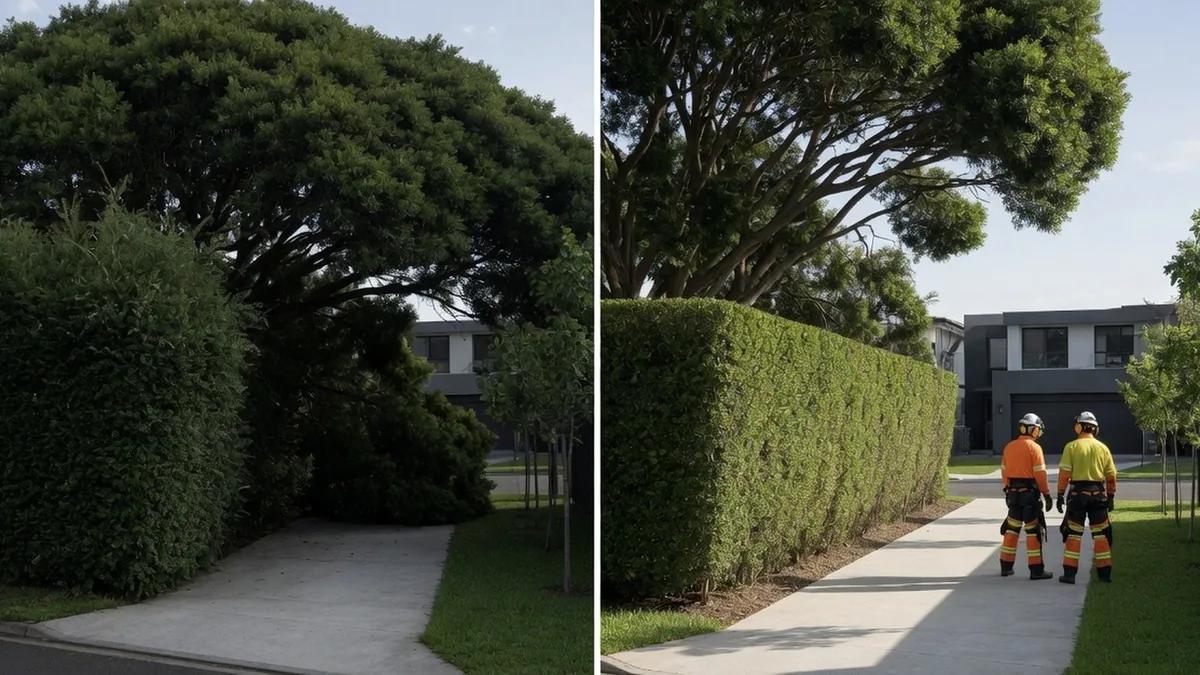
Neat, regular hedge and screen trimming to keep boundary plantings tidy across Camden's older gardens and the newer estate fence lines alike.
Learn more →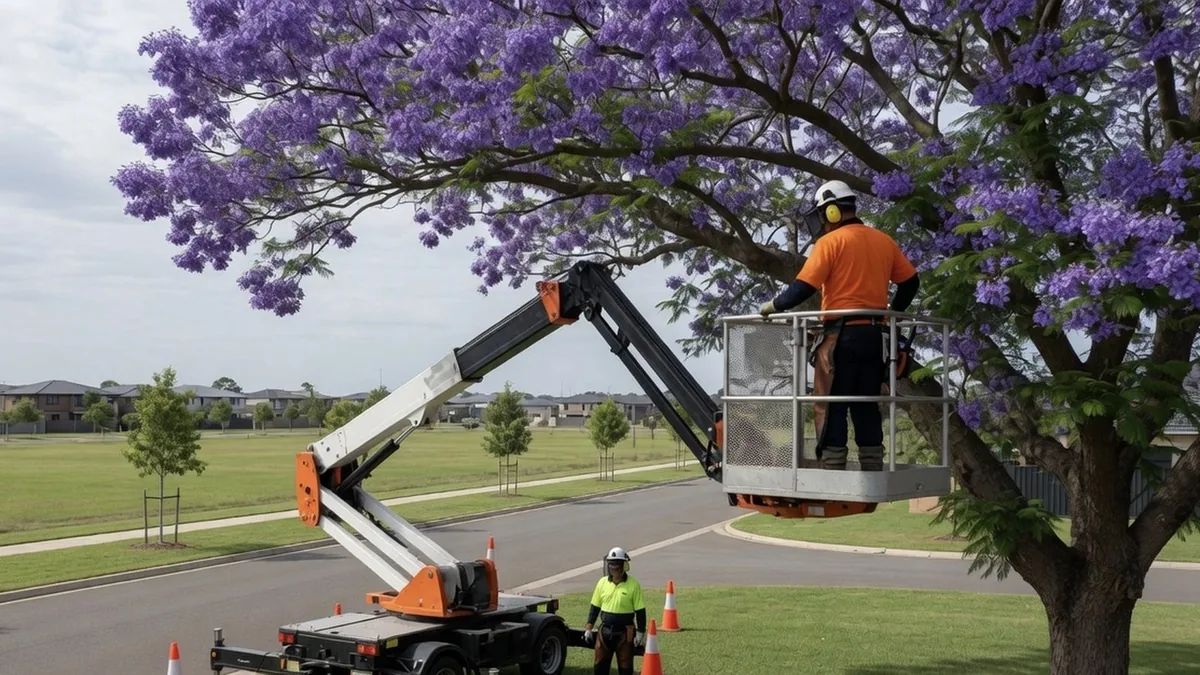
Specialist take-down of overgrown or storm-damaged palms, a common job on Camden South and Elderslie blocks where old plantings have outgrown the yard.
Learn more →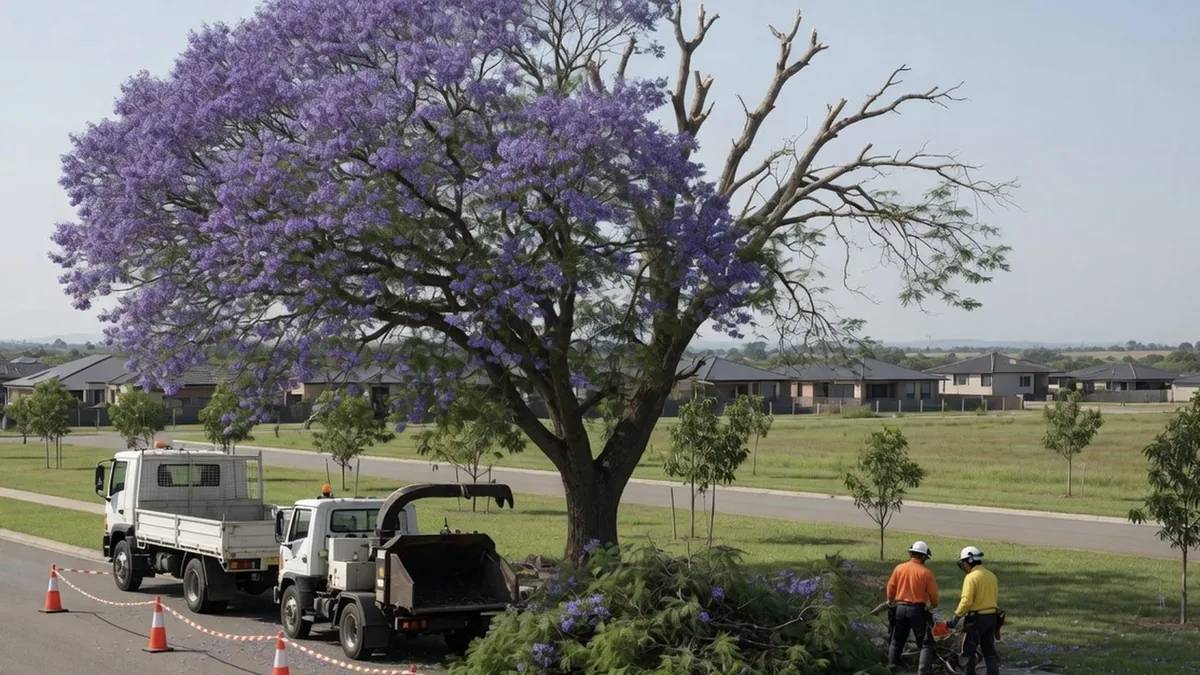
Fast, local response to storm-split branches and fallen trees across the Camden area — we turn up when we say we will and make the yard safe again.
Learn more →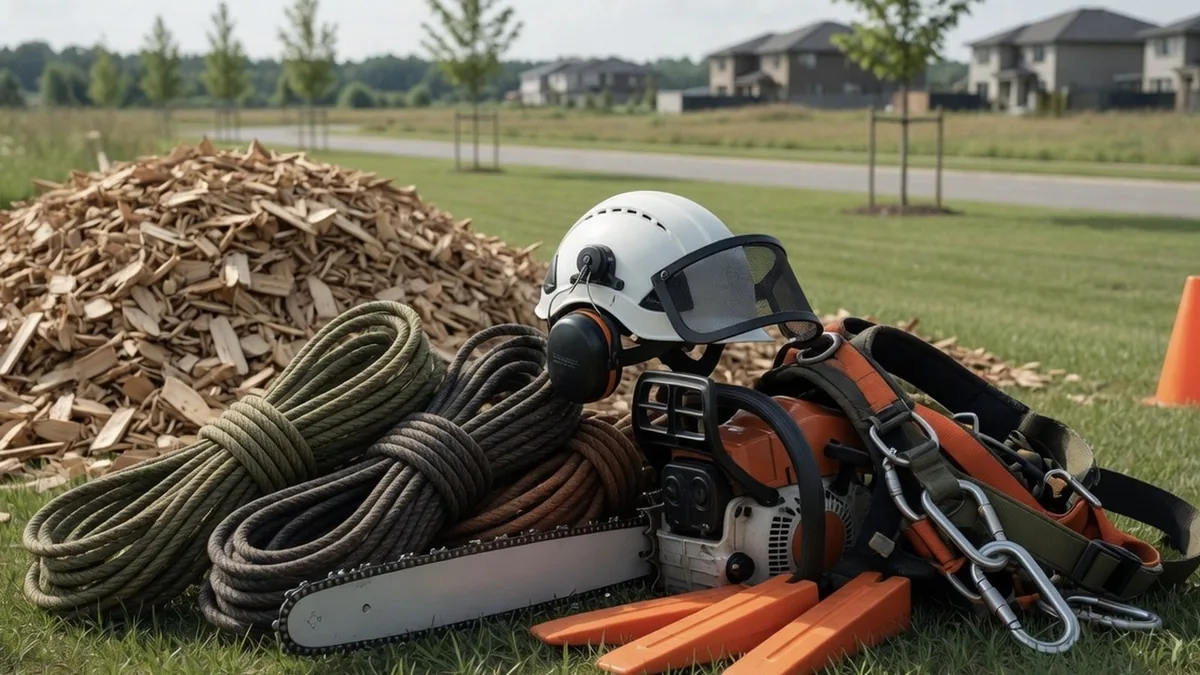
On-site chipping and full green waste removal after every job, so lopping old camphor laurels or clearing a new-estate block never leaves a mess behind.
Learn more →Usually, yes. Under Camden Council's Development Control Plan a tree is protected once it is 3 metres or more tall, has a trunk 100mm or more in diameter measured a metre above the ground, or has a branch span of 3 metres or more — and most established backyard trees clear at least one of those. Applications go through the NSW Planning Portal and Council assesses them within 28 days. A short list of species is exempt, and minor pruning of branches under 50mm is allowed. We will walk you through which bucket your tree falls into before anything is booked, and if it is borderline we will tell you to ring Council rather than guess.
Quotes are free and there is no obligation to go ahead. Call (02) 4602 1480 and we will connect you with a local crew who can look at the job, talk you through the options and give you a clear price. Storm-damaged or genuinely unsafe trees get moved to the front of the queue.
We clean up. Branches are chipped on site or loaded out, the lawn gets raked, and the driveway is blown down before anyone leaves. If you want the chip left behind as mulch for the garden beds, just say so when you book — plenty of Camden gardens on heavy clay soil are better off for it.